Wednesday, April 6, 2022

What is that Thing called Belonging?

by Denise Wilson, April 11, 2022

Few words are much easier to feel than to describe, but belonging is one of them. In any social or work setting, I can tell you in an instant whether I feel I belong or not and to what degree, but if you ask me to neatly and concisely define what belonging is and why I feel it when I do and don't feel it when I don't, I will stare at you blankly - as if you just landed in front of me from another planet.   

Wikipedia reports that belongingness is a strong feeling of being accepted within a group, of being part of something bigger than ourselves. Psychologists Baumeister & Leary argue that the desire for belongingness is so strong that it is a basic human motivation, a need that everyone, regardless of culture, status, race, ethnicity, gender, or anything else, must satisfy to avoid dire psychological consequences.  Such dire consequences include stress, anxiety, grief, pain, loneliness, and other forms of negative emotional states that, when chronic, lead to depression, suicidal ideation, and other debilitating psychological states. Belonging needs can be met at work, with family, at church, with friends, or in any other community where a person can be an accepted member of a group.  


At work, meeting the need to belong extends beyond having a place of impact and value in an organization. While these things are important and provide a sense of fit and purpose in one's work that contributes to job satisfaction, a true sense of belonging will emerge only when positive relationships at work are valued alongside contributions to the organization. An employee feels like they belong at work when they feel they can be their whole and authentic self in the workplace and when they are accepted for such. 

But sense of belonging is not only important to the employee; it is also crucial to the organization. Employees who feel a strong sense of belonging are more engaged in their work, contribute more, share more ideas, make better decisions, and collaborate more readily. All of these things are critical to supporting the innovation, excellence in design, and problem-solving capability that are the hallmarks of good engineering.   

Belonging is a fundamental psychological need but is often neglected in the workplace. Perhaps this is in part because the connection between belonging and productivity is not widely recognized or understood. Perhaps this is also because belonging can be a difficult feeling to dissect. For many of us, it is easy to gauge our sense of belonging, but it is often difficult to put our finger on exactly why we feel like we do or don't belong. 

So, the next time at work when you notice you are experiencing a feeling of belonging, take a moment to try to understand why. Ask yourself a few questions to raise your self-awareness: 

  • Do you feel accepted at work?
  • Do you feel meaningful connections to one or more coworkers?
  • Do you feel welcome in your work group? 
  • Do you feel that your coworkers support you in contributing to the group?
  • Do you feel comfortable at work?
  • Do you feel like you can be yourself?

Engineers tend to be data-driven people. Things that can't be quantified sometimes make us anxious. But belonging is actually not some sort of fuzzy, squishy feeling that floats in the ether of everyday life. Rather, it is grounded in good relationships. It manifests as positive interactions with others, and in the stability of those relationships and bonds that result from the positive interactions. And it can, in fact, be measured!

And it should be measured, because belonging matters to organizations just as much as it does to individuals:

    "A sense of belonging is what unlocks the power and value of diversity." (Cornell University)

Please help us to better understand belonging in the engineering workplace by taking our survey (open to engineers and computer scientists as well as those who have worked closely with them):

More about Belonging:

Cornell University Diversity and Inclusion (2022). Sense of Belonging

Huang, Steven (2020). Why does Belonging Matter at Work? Society for Human Resource Management (SHRM). 

University of Washington. Understanding and Evaluating Belonging in Higher Education

References:

Baumeister, R. F., & Leary, M. R. (1995). The need to belong: desire for interpersonal attachments as a fundamental human motivation, Psychological Bulletin, 117(3), 497-529. 

Gabriel, S. (2021). Reflections on the 25th anniversary of Baumeister & Leary’s seminal paper on the need to belong. Self and Identity, 20(1), 1-5.


Denise Wilson is a professor of electrical and computer engineering at the University of Washington in Seattle, Washington. Her research interests in engineering education focus on belonging, engagement, and instructional support in the undergraduate engineering classroom.   


Tuesday, March 22, 2022

Research project is launched!

by Jennifer VanAntwerp, March 22, 2022

The latest version of the Engineering CAReS survey is here.  


Image courtesy of nck_gsl from pixaby.com

We are excited to report that Engineering CAReS, a study of belonging in the engineering and computer science workplace, is now underway! Our long-term project goal is to determine what cultivates healthy, engaging, productive, and inclusive workplaces. (Why is this important? Check out the last post!)


Eventually, we will need to hear from a very large number of working (or formerly working) technical professionals about what they loved – or maybe didn’t love so much – about the workplace culture(s) they have encountered. But to draw evidence-based conclusions, we need to ask questions that can actually measure what we would like to measure. And we need a survey that is short enough that people will be willing to finish it.

So, that brings us to the first step of the project: the tool development phase. We have identified the ideas that need to be in the study. Based on the existing research literature, we know many of the things that lead to a person feeling more like they belong, in general. But no one has yet confirmed that these are in fact important in our particular setting of interest, or how much so.

Some of these things that might impact positive experiences of workplace culture are pretty straightforward to measure – gender, race, size of the workgroup or the employer. But many others are abstract concepts like engagement and self-confidence and autonomy and civility. Happily, psychologists have already figured out ways to measure these abstractions. However, we need to be sure that these measurements still work well when applied specifically to working engineers and computer scientists (and also to those who work with them!). Also, to make the survey shorter (Yes! We definitely want it to be shorter), we need to figure out the bare minimum number of questions we can use on our survey to still get a reliable and reproducible measurement of each of these concepts. This tool development phase allows us to use statistics to appropriately reduce the size of the survey.

We also have some suspicions of our own (“hypotheses” is maybe the more official term?) about additional things that might be of particular importance within technical workplaces. These abstract concepts don’t yet have a scientifically validated way to measure them, yet. So this tool development phase allows for that, as well.

Tool development, then, is actually a really exciting phase! But you might be starting to notice the big challenges, too. First, the survey at this stage is long – about 25 minutes long. (For those of you who have already completed it, thank you!!) And second, statistics are the name of the game, and we need enough people now, in Phase 1, to be able to whittle the survey down for Phase 2 when we recruit a much larger number of people.

How many people, you ask? Well, for this first phase, we need at least 360 people to complete the survey. We are fresh out of the gate and need willing participants to help us out. If you have already completed the survey, thank you! If not, then please join us!


We will post updates here on this blog about the progress of the project, once or twice a month. If you are interested, follow this blog to get notification of new posts.  We will also update our progress on this blog. Feel free to check back to see how we are doing in getting closer to our target. 

As of March 22, 2022, we have 21 respondents and we need at least 339 more....


The CAReS project is led by Principal Investigators Denise Wilson and Jennifer VanAntwerp.


Denise Wilson is a professor of electrical and computer engineering at the University of Washington in Seattle, Washington. Her research interests in engineering education focus on belonging, engagement, and instructional support in the undergraduate engineering classroom.


Jennifer VanAntwerp is a professor of chemical engineering at Calvin University in Grand Rapids, Michigan. She researches how engineers learn, work, and thrive, beginning in college and extending throughout their professional careers. 


Tuesday, March 15, 2022

Belonging in the "Engineering CAReS" Study

by Jennifer VanAntwerp, March 15, 2022


Much of what human beings do is done in the service of belongingness.
(Baumeister & Leary, 1995)


A square peg in a round hole.

Most of us have felt like that square peg at some point. In a college class. In a high school club. Meeting up again with that group of friends who has stayed close over the past years while you have drifted away. The oldest person in the room. The youngest. We tried to enter that space but discovered that we were not going to make it in through that round hole unless someone whacked us very hard on top of our square peg head to cram us inside. If we do make it inside, we will be a bit bruised – or maybe even find that some of our edges have been shaved off.  And so, we debate…how much do we really want to be in that room? Is it worth the brutal passage? And once we are in, will the bruises heal?


Engineering can be one of these round hole places. But we want to see a greater diversity of people working in engineering – diverse in thinking patterns, leadership styles, vision, perspective.

This is good for individuals, but this is even better for the whole profession of engineering. For that reason, we are embarking on a large-scale study of the current state of the engineering workplace culture. We want to know who feels like they belong, who doesn’t, and why. And, we want to know more about how that sense of belonging comes alongside feelings of being competent and having some say-so in our daily work lives (autonomy). Hence the name of our study, Engineering CAReS: Engineering Competence Autonomy Relatedness (a.k.a. Belonging) Study.

From its beginning, the round hole that is engineering was closed to most types of pegs. Over the past 50 years, we have gradually invited more shapes of pegs to come in. But that hole is still very round. Anyone is welcome to enter, but they will often have to accept the many compromises that it takes to fit through – and live in – that round hole. 

But does it have to be that way? What if the hole could be carved out to be square, instead? Or even made large enough to let the triangles and crescents fit through unscathed as well?

The U.S. has spent decades trying to increase the diversity of people in engineering. Of course, most of those efforts focus on the pegs - how engineering can do a better job of shaving those square pegs into round ones. Our research team wants to flip that question around. How can we carve out engineering fields so that they form a new shape, one that allows more people to enter – and to stay – without needing to change their own shape?

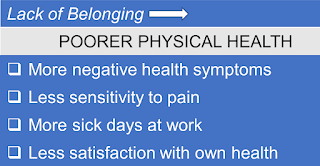
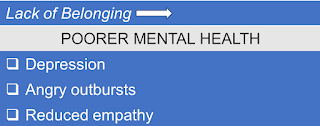
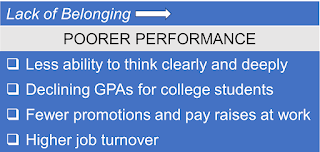
We think this question is important. Every person fundamentally wants to feel that they belong. Belonging matters. Psychology researchers report a laundry list of problems linked to unmet needs for belonging. 

So, then, what about engineering? Do engineers feel a sense of belonging within their workplaces? Is that equally true for different groups of engineers? What aspects of the workplace best support – or hinder – an engineer’s ability to feel like they belong?

Because of this, we are excited to be launching a new research study. We are seeking answers to these questions about belonging (and the equally important and influential needs of competence and autonomy), and in a setting that is ripe for better understanding – the engineering workplace. This blog is where we will periodically post our progress. If you are interested, please follow along with us! We always appreciate your public comments here in this blog space. Or, reach us using the private contact form below.

Thanks for joining us in this journey to a new, and better, engineering future.


Are you interested in participating in this project by completing an online research survey? 

Click here to read more about the survey.


Jennifer VanAntwerp is a professor of chemical engineering at Calvin University in Grand Rapids, Michigan. She researches how engineers learn, work, and thrive, beginning in college and extending throughout their professional careers. 

Phase 2 of the Engineering CAReS Study

  by Denise Wilson and Jennifer VanAntwerp, February 8, 2025 Much of what human beings do is done in the service of belongingness. (Baumeist...